


Thank you for visiting my website. You will find information about my work and my activities as the Member of Parliament on behalf of the people of Walsall South. You can contact me directly through the website and find details about my office. Owing to Covid-19 I am unable to meet at surgeries, and I am now conducting telephone surgeries. I use the House of Commons Parliamentary answering service when my office is busy or out of hours. Please leave your message with them and remember to give your name, address and contact details. The Answering Service will send me an email with your message
If you have any problem or issue you think I may be able to help you with, please do get in touch.
Please note that Members of Parliament are not an emergency service so do contact the appropriate emergency services when required.
I would like to thank the NHS for their wonderful service during the pandemic.
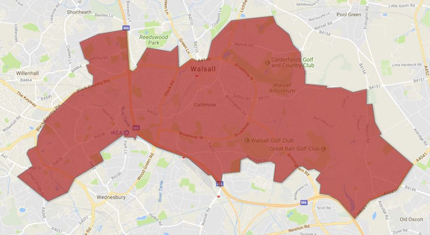
About Walsall South
Do you live in the constituency? Follow the link below to check that Valerie is your MP.
Press Releases
Keep updated with the latest news locally, media coverage and news from Parliament.
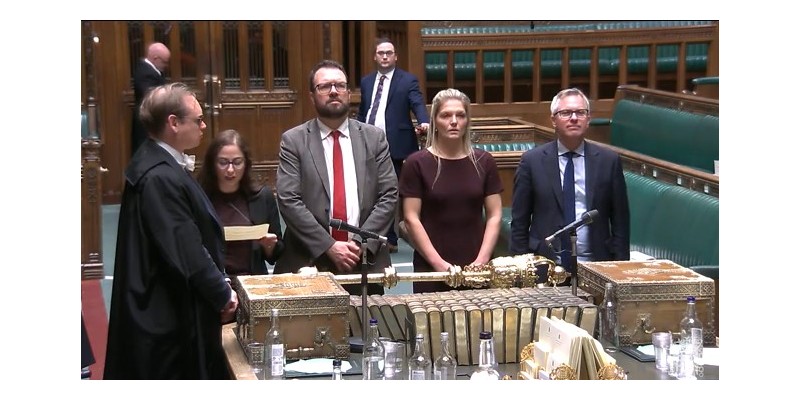
The Bill seeks to strengthen justice and restore trust by removing unlawful immunity for Troubles‑related crimes, reaffirming victims’ rights to redress and ensuring accountability.
On Wednesday 21 January 2025 the House of Commons debated the draft Northern Ireland Troubles (Legacy and Reconciliation) Act 2023 (Remedial) Order 2025 and asked for it to be approved.
The previous approach to dealing with the legacy of the Troubles ultimately fell short. Following the Dillon judgment, the UK Government is legally required to act, and this remedial order marks the first step. It removes two provisions of the Northern Ireland Troubles (Legacy and Reconciliation) Act 2023 found incompatible with our human rights obligations, ensuring that our legacy framework is placed on a lawful and credible footing.
The remedial order removes provisions on immunity under that Act. This immunity has damaged trust in Northern Ireland. Removing it provides clarity and certainty ahead of the wider, significant reforms contained in the Northern Ireland Troubles Bill. The remedial order will also remove the bar on Troubles‑related civil cases, which stopped UK citizens from exercising their right to seek redress.
Northern Ireland continues to live with the legacy of the Troubles. While the 1998 Good Friday Agreement marked a significant point in moving away from conflict, many families still have questions about the circumstances surrounding the deaths of their loved ones. This order forms part of ongoing efforts to address those issues within a lawful and rights‑compliant framework.
The order was passed Ayes: 373 Noes: 106.
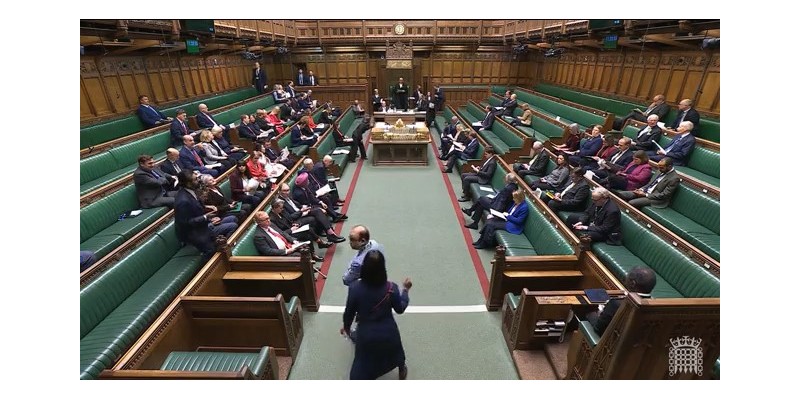
The Bill will raise employers’ national insurance contributions to 15%, lower the secondary threshold to £5,000, and increase the employment allowance to £10,500. There were two amendments selected for debate and votes:
Amendment 5, which would exempt basic rate taxpayers in England, Wales and Scotland from the £2,000 cap, was rejected: Ayes 191, Noes 326.
New Clause 5, which would require the Government to calculate and publish the changes to lifetime pension values before and after the changes made in this Bill have taken effect, was rejected: Ayes 195, Noes 317.
The Bill passed its Third Reading: Ayes 316, Noes 194 and will continue to be debated in the House of Lords.

On Wednesday 21 January 2026, the APPG of which I am co Chair with Baroness Barbara Keeley held a meeting to discuss and hear from our two speakers.
The first was Music Education Reflections from the Curriculum Assessment Review presented by Sophie Lewis Association of British Orchestras Chair and Chief Executive , National Children's Orchestras of Great Britain.
Sophie said that the music community were pleased that the EBAC had been abolished by the Government but were concerned that music was not clearly defined in the "creative" subjects. We needed a definition of a creative subject. Also the National Centre for Arts and Music Education was acknowledged but there was no further information about it and no pledges. She also said there was a lack of specialist music teachers and we needed greater clarity on music provision and teachers.
The second speaker was Olga Fitzroy, Director of Campaigns and Engagement UK Music. A paper Ideal Solutions for Cultural Touring Issues was distributed but the key points were that the CARNET a passport for equipment which is required for every piece of equipment in order to tour in the EU.
Cabotage refers to the practice of transporting freight between two places within the same country by foreign restricted trucks. Post Brexit, cabotage rules limits UK trucks to making 3 stops in the EU. this forces many tours to avoid using UK flagged trucks or reroute back to the UK after 3 stops. Our event haulage sector was once at the centre of the European industry.
Some British companies are relocating to EU countries. A quick fix would be to change the narrow definition in Article 460 of the TCA to the Liberalised transport section of the European Conference of Ministers of Transport (ECMT) which would make non commercial properties for theatrical musical film and sports and those intended for radio recordings or film and television production and transport of goods exempt from permit requirements.
Olga also said it was difficult to negotiate 27 different VAT regimes and cultural exchange was important.
The meeting resolved to raise the issue with Ministers.

The first ever UK Town of Culture competition, announced by the Culture Secretary Lisa Nandy in October 2025 will celebrate the rich culture, history and identity of towns right across the UK.
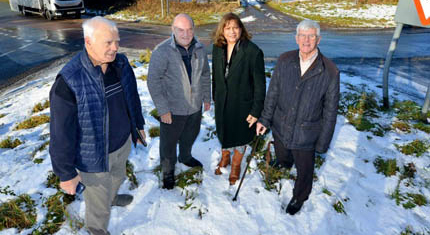
I had the opportunity to speak with Ian Murray MP, Minister for Creative Industries, Media and Arts (pictured) about the Leather Museum. The Minister is responsible for museums and cultural property, tourism and heritage, and I showed him the keyring I made at my recent visit to the Leather Museum.
Over 3,000 people have signed a further petition to save the Leather Museum in its current site.
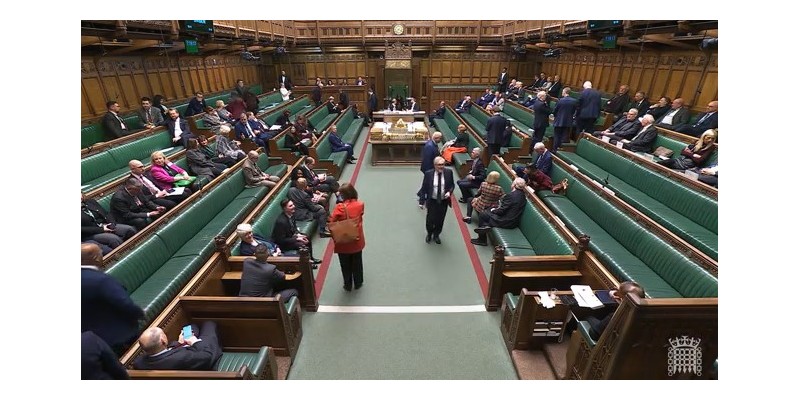
This Bill will implement in UK law certain provisions of the treaty signed in May 2025 between the UK and Mauritius agreeing the status and future of the Chagos Archipelago, including the joint US–UK military base on Diego Garcia (the archipelago’s largest island). The UK currently administers the Chagos Archipelago as the British Indian Ocean Territory, one of the UK’s 14 Overseas Territories.
After the Bill passed its third reading in the House of Commons on 20 October 2025, it was amended in the House of Lords before returning to the Commons on 20 January 2026. There were 6 amendments. Lords amendment 4 was agreed to, and amendments 2 and 3 were withdrawn after it was deemed by the Speaker that they would impose a charge on public revenue that has not been authorised by a money resolution in the Commons. The 3 remaining amendments were subject to motions to disagree:
Lords Amendment 1 would require the Secretary of State to negotiate an amendment to the treaty so the UK could stop making payments to the Mauritian Government in the event that it cannot use the Diego Garcia Military base was rejected: Ayes 344, Noes 182.
Lords Amendment 5 would require the Secretary of State to publish a statement setting out the total costs of payments to Mauritius under the treaty, and the methodology used to calculate those costs was rejected: Ayes 347, Noes 185.
Lords Amendment 6 would require the Secretary of State to lay an estimate of the anticipated expenditure related to the treaty before the House of Commons. In the event of Mauritius not honouring the provisions of the treaty, where all dispute mechanisms have been exhausted, the amendment would require the Secretary of State to lay before the House of commons a resolution to cease payments under the treaty. This was rejected: Ayes 347, Noes 184.
A Committee was appointed to draw up reasons for disagreeing with the Lords amendments, which will be reported and communicated to the Lords.
Videos
Covid Memorial Wall
20mph Speed Limits
RAF Centenary Flypast