


Thank you for visiting my website. You will find information about my work and my activities as the Member of Parliament on behalf of the people of Walsall South. You can contact me directly through the website and find details about my office. Owing to Covid-19 I am unable to meet at surgeries, and I am now conducting telephone surgeries. I use the House of Commons Parliamentary answering service when my office is busy or out of hours. Please leave your message with them and remember to give your name, address and contact details. The Answering Service will send me an email with your message
If you have any problem or issue you think I may be able to help you with, please do get in touch.
Please note that Members of Parliament are not an emergency service so do contact the appropriate emergency services when required.
I would like to thank the NHS for their wonderful service during the pandemic.
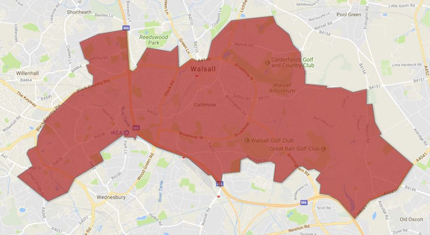
About Walsall South
Do you live in the constituency? Follow the link below to check that Valerie is your MP.
Press Releases
Keep updated with the latest news locally, media coverage and news from Parliament.
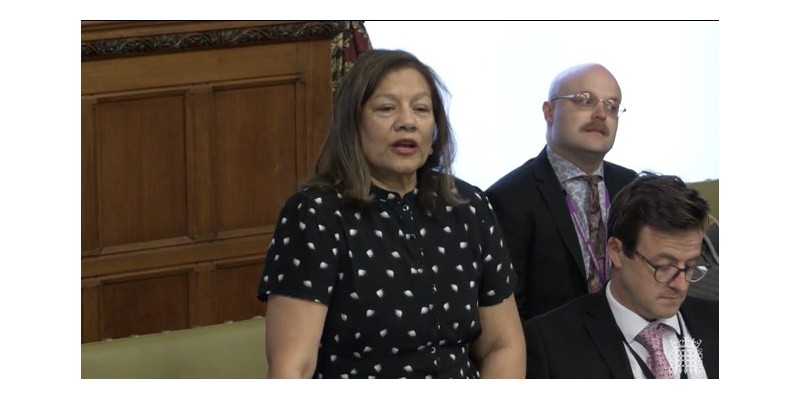
I chaired the debate in Westminster Hall on Thursday 3 July 2025 : "That this House has considered the future of music education". The member in charge was Bambos Charalambous MP and chair of the APPG on Music Education. The debate was responded to by the Minister for School Standards, Catherine McKinnell MP.
As co- Chair of the Classical Music APPG, I was delighted that the Minister had made a number of financial commitments and the in particular to a National Centre for Arts and Music which will link up with the Music Hubs.
You can read the Ministers response Hansard, the Official Report.

As Co-Chair of the All-Party Parliamentary Group on Classical Music we held a meeting at Millbank House on 2 July 2025. The meeting chaired by Co Chair Baroness Keeley heard a presentation by Dr Adam Whittaker Associate Professor of Music and Head of Pedagogy at Royal Birmingham Conservatoire and Dr Anthony Anderson associate Professor in Music Education at Birmingham City University, "A Vision for the National Centre for Arts and Music Education", offering proposals for cost-effective and impactful solutions that could be enacted by the new National Centre.
The overview :
To ensure a sustained and universal music curriculum;
support the availability and uptake of formal music qualifications;
invest in high-quality reflective continuing professional development (CPD) for music teachers;
address the music teacher recruitment and retention crisis;
improve data collection for music education quality and impacts;
implement targeted investment schemes to address regional and socioeconomic disparities.
The Report made suggestions for the next steps:
To embed a research strand into the centre's development so it is based on evaluative approaches;
Convene discussions between teachers and key cultural stakeholders which is inclusive, to realise untapped artistic value and possibility;
Developing robust ways of monitoring returns on investment to enable hubs to make the most of their grant;
Think about what can advance the access young people have to music in schools at all levels so that the National Centre for Arts and Music Education does not become a missed opportunity.
A discussion followed of how partners with the Government could share data on Music education and what the National Centre for Arts and Music Education would do to work with the Music Hubs. The next day 3 July 2025 there was a debate on Music Education where it was hoped more information would be provided by the Minister.
Shireland CBSO Academy in Sandwell, neighbouring Walsall and Bloxwich, is leading the way in music education with its collaboration with the City of Birmingham Symphony Orchestra.
(Main photo by Maddy Collins-Cairns)

I was delighted to be invited to the Busil Jones Primary Summer Fair on 21 June 2025 in Bloxwich and gave a gift of House of Commons Mints to the Head for the staff.
I am with the Head Nicola Baylis and met the staff who were helping out with the fair.
The School have a new Library and I was pleased to present some books and the Bag to some pupils, kindly donated by the Reading Agency.
There was a book sale where books could be picked up for £1. It was good to see children picking up books and reading for pleasure a key theme of the Reading Agency.
There was a bouncy castle and a hot dog stand, the usual fun at a fair.

The House of Commons met to debate the next stages of the Bill on 13 and 20 June 2025. The amendments that I tabled were grouped in Group 2 to be debated on but I did not push them to a vote. My amendments were:
1 1A. Amendment to require consultation for guidance on the operation of the Act.
Clause 37: This amendment would amend clause 37, requiring the Chief Medical Officer to consult people from BAME communities, and advocate groups representing those communities before issuing guidance on the operation of the Act.
Clause 37, page 28, line 14, at end insert-
“(ii) persons from Black, Asian and Minority Ethnic communities and advocate groups representing those communities, and
(iii) representatives of the healthcare sector, including persons who work in hospices.”
2 Annual reporting
Clause 45 requires the Commissioner to produce an annual report, which includes information about the application of the Act on “persons who have protected characteristics”.
Clause 46 requires the SoS, 5 years after the passing of the Act, to publish a review of the Act within the following 12 months.
Amendment 2A
This amendment makes an explicit requirement to include information on about the application of the Act in relation to people from BAME communities.
Clause 45, page 32, line 20, after “characteristics” insert “, including persons representing Black, Asian and Minority Ethnic communities,”
Amendment 2B
This amendment requires the review to examine the impact of the Act on people from BAME communities.
Clause 46, page 33, line 11, after “disabilities” insert— “and,
“(ii) persons from Black, Asian and Minority Ethnic communities”
3 New Clause on Commissioner’s Consultation Boards
“Board to consult communities
(1) The Commissioner must, within six months of being appointed under this Act, appoint a consultation board.
(2) The role of the board is to consult communities in order to report to the Commissioner on the impact of the Act on those communities.
(3) The Board must report to the Commissioner and the Secretary of State every 12 months from its appointment on its findings. [Note: Timing could be changed]
(4) The communities that the Board must consult include—
(a) people from Black, Asian and Minority Ethnic communities
(b) [Can add further groups]”
(5) The Board may consult other groups in addition to those listed in subsection (4) as it considers appropriate.
(6) The Secretary of State must, within 3 months of receiving a report under subsection (3), lay that report before both Houses of Parliament.
4 New Clause on Civil Procedure rules/Probate
This New Clause would require the SoS to publish a report on the implications of the Act for the civil procedure rules and probate proceedings.
Amendment 3
“Implications for civil procedure rules and probate proceedings
(1) The Secretary of State must, within six months of the passing of this Act, publish a report setting out the implications of this Act on—
(a) the civil procedure rules, and
(b) probate proceedings
(2) The report in subsection (1) must include an analysis of likely consequential changes to the civil procedure rules and probate proceedings in consequence of this Act.”
ECHR memo Amendment 4 This amendment does two things:
Remove the automatic coming into force of the Act within 4 years of its passing.
Require the SoS to make a statement of compatibility, or that they wish to proceed despite not being able to make such a statement, before they can bring provisions into force via SI.
Clause 54, page 36, line 21, leave out subsection (4) and insert—
(4) Regulations under this section cannot be made unless the Secretary of State has previously—
(a) made a statement to the effect that in their view the provisions of the Act are compatible with the Convention rights; or
(b) made a statement to the effect that although they are unable to make a statement under subsection (4)(a), the Government nevertheless wishes to proceed with commencing provisions of the Act.
(4A) The statement required by subsection (4) must be laid before both Houses of Parliament.
(4B) A statement under subsection (4)(b) must include the steps the Government plans to take to resolve any incompatibility.
The following clauses and amendments were voted on:
Amendment (b) to New Clause 14: This amendment would limit the exceptions that can be created to the advertising ban set out in New Clause 14 and also provides that regulations cannot amend the Suicide Act 1961, which includes the offence of assisting and encouraging suicide. Ayes 233, Noes 254
New Clause 1: No registered medical practitioner or other health professional shall raise the subject of the provision of assistance in accordance with this Act with a person unless that person has first raised it. I voted for the amendment, and it was defeated with the result: Ayes 230, Noes 256.
New Clause 2: No registered medical practitioner or other health professional shall raise the subject of the provision of assistance in accordance with this Act with a person under the age of 18 . I voted for the amendment, and it passed with the result: Ayes 259, Noes 216.
New Clause NC16: This new clause ensures that a wish to end one’s own life that is substantially motivated by the factors listed in the amendment does not qualify for the provision of assistance under this Act. I voted for the amendment, and it was defeated with the result: Ayes 208, Noes 261.
Amendment 24: This amendment would disapply the presumption that a person has capacity unless the opposite is established. I voted for the amendment, and it was defeated with the result: Ayes 213, Noes 266.
Amendment 12: This amendment would prevent section 1 of the National Health Service Act 2006, which sets out the purposes of the NHS, from being amended by regulations. Its effect would be to require changes to be made by an Act of Parliament instead. I voted for the amendment, and it was defeated with the result: Ayes 223, Noes 269.
Amendment 77: This amendment provides for New Clause 13 (regulation of approved substances etc) and New Clause 14 (prohibition on advertising), and the general provisions of the Bill, to extend to each part of the United Kingdom; and for New Clause 10 (no obligation to provide assistance etc) and New Section 1 (protection from detriment) to extend to England and Wales and Scotland. I voted against the amendment, but it passed with the result: Ayes 275, Noes 209.
Amendment 94: This amendment provides that the Welsh Ministers have power to commence clauses 39(1) and (2) and New Clause 21(2) and (3), and that other provisions of the Bill come into force in accordance with subsections (1) to (4) of this clause. I voted against the amendment, but it passed with the result: Ayes 274, Noes 224.
The question was put that the Bill be read a third time, and passed by 23 votes with the result: Ayes 314, Noes 291. The Bill will now progress to the House of Lords for further debate and scrutiny.
A constituent contacted me regarding the use of an E-bike. While the government offers advice on electric bike rules: https://www.gov.uk/electric-bike-rules, the rules are silent on the use of twist-and-go throttles for people with disabilities.
The Minister Simon Lightwood MP provided a helpful response to my letter to him on behalf of my constituent which I though would helpful to disseminate:
The EAPC regulations do not specify any requirements related to throttles, but type approval requirements need to be considered. Throttles that can propel an EAPC from 3.7 mph to 15.5 mph are allowed on EAPCs (also known as ‘Twist and Go’ EAPCs) however, the vehicle then requires approval either to assimilated EU regulation 168/2013 or the domestic Motorcycle Single Vehicle Approval (MSVA) scheme.
If your e-bike meets the EAPC regulations but is fitted with a throttle, you will be able to submit it for MSVA with the Driver and Vehicle Standards Agency (DVSA) as a 250W Low Powered Moped (250W LPM). The Specialist Vehicle Testing and Approval team will be able to offer support with your application: [email protected]
If approval is gained, your e-bike can be used in the same way as a pedal cycle except for age restrictions. The rider needs to be 14 years of age or older to ride it on roads and cycleways, and it does not require registration, compulsory insurance, vehicle excise duty, or annual roadworthiness testing. The rider is not subject to driver licensing and helmet wearing requirements.
Videos
Covid Memorial Wall
20mph Speed Limits
RAF Centenary Flypast