


Thank you for visiting my website. You will find information about my work and my activities as the Member of Parliament on behalf of the people of Walsall South. You can contact me directly through the website and find details about my office. Owing to Covid-19 I am unable to meet at surgeries, and I am now conducting telephone surgeries. I use the House of Commons Parliamentary answering service when my office is busy or out of hours. Please leave your message with them and remember to give your name, address and contact details. The Answering Service will send me an email with your message
If you have any problem or issue you think I may be able to help you with, please do get in touch.
Please note that Members of Parliament are not an emergency service so do contact the appropriate emergency services when required.
I would like to thank the NHS for their wonderful service during the pandemic.
About Walsall South
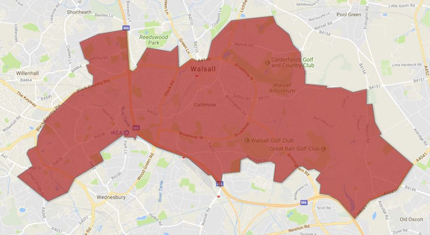
Do you live in the constituency? Follow the link below to check that Valerie is your MP.
Press Releases
Keep updated with the latest news locally, media coverage and news from Parliament.
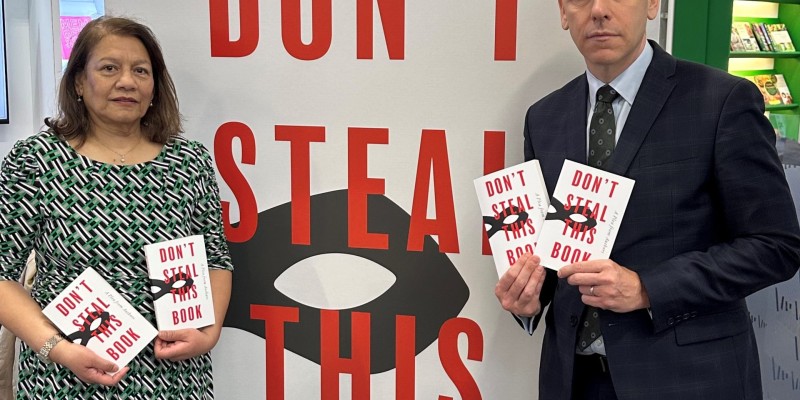
I attended the London Book Fair on Tuesday 10 March 2026 and the Publishers Association stand highlighted "Don't Steal This Book", a campaign organised by Ed Newton-Rex, a composer and campaigner for protecting artists’ copyright.
Don't Steal This Book has only the list of nearly 10,000 authors and the rest of the pages are empty. The authors came together to publish the book as a protest against the "scraping" of their work without their permission by AI firms to train their models.
The full list of authors can be found on the campaign's website: dontstealthisbook.com
On 18 March 2026, the Secretary of State for Science, Innovation and Technology will publish:
1. An economic impact assessment, including an assessment of each of the options put forward in the government’s consultation on copyright and AI. It may also include alternatives to these options. It must include an assessment of the economic impact of each option on copyright owners and AI developers, including individuals, micro, small, and medium-sized businesses.
2. A report on the use of copyright works in the development of AI systems, which will consider each of the 4 options put forward in the government’s consultation on copyright and AI. It may also consider alternatives to these options. These options were:
Option 0: Do nothing: Copyright and related laws remain as they are
Option 1: Strengthen copyright requiring licensing in all cases
Option 2: A broad data mining exception
Option 3: A data mining exception which allows right holders to reserve their rights, underpinned by supporting measures on transparency (government’s preferred option)
I am pictured with my colleague Chris Evans MP.
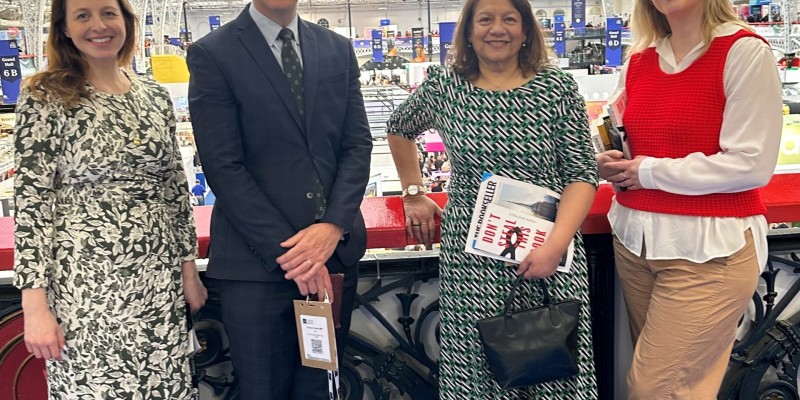
The London Book Fair at Olympia is in its 55th year and brings together exhibitors, customers, publishers and readers, authors and agents, over three days. It enables all those interested and working in the Publishing Industry to meet.
It serves as a global marketplace for rights negotiation and the sale and distribution of written content. This year there were 1005 exhibitors from all 7 continents.
The Publishing Industry is worth £11billion to the UK economy. I was a guest of the Publishers Association the secretariat of the APPG on Publishing.
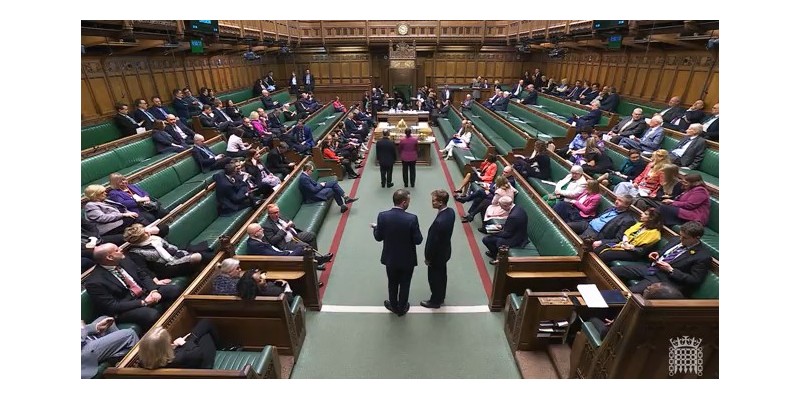
The Bill returned to the House of Commons after passing its third reading in the Lords as amended on 9 March 2026. It is now in its final stages.
The Bill aims to remove barriers to opportunity in schools and improve the education system to make it safer for every child. It also seeks to strengthen regulation, improving quality of care to ensure it meets children’s needs and keeping children rooted in their families and local communities where possible.
The Commons agreed to most of the Lords amendments. There were 12 amendments which were rejected and 8 were put to the vote and I voted to support the motions to disagree with the Lords amendments and they were rejected as set out below:
1 Lords Amendment 16, was rejected Ayes 309, Noes 181.
The Government is currently conducting a public consultation on adoption and special guardianship support services.
2 Lords Amendment 17 was rejected: Ayes 306, Noes 182
The Amendment will not alter a local authority’s core duties in relation to contact between a looked after child and their siblings, and so will not achieve the aim of promoting contact between looked after children and their siblings which would have required a review into the level of funding available from the adoption and special guardianship support fund and recommendations to increase these funds.
3 Lords Amendment 37 was rejected: Ayes 321, Noes 106
This amendment was about the prohibitions of Virtual Private Networks (VPNs) to children.
4 Lords Amendment 38 was rejected: Ayes 307, Noes 173. The amendment related to a ban on social media for under-16s.
The Government proposed in response to both Lords Amendments 37 and 38 to grant the Secretary of State for Science, Innovation and Technology the power to amend the age of consent for consenting to data processing for websites and apps, depending on its purpose, to anywhere between 13 and 16. The current age of consent is 13.
5 Lords Amendment 41 was rejected: Ayes 316, Noes 171
Imposing a monetary cap on branded items of school uniform may have undesirable effects.
6 Lords Amendment 44 was rejected: Ayes 315, Noes 109
The Amendment would involve a charge on public funds, and the Commons do not offer any further Reason, trusting that this Reason may be deemed sufficient.
7 Lords Amendment 102 was rejected: Ayes 315, Noes 163
The Amendment imposes inappropriate restrictions on the scope of the adjudicator’s powers to determine school admission numbers under clause 56 and the clause already provides for regulations to make provision about the matters the adjudicator must consider when making a determination about a school’s admission number.
8 Lords Amendment 106 was rejected: Ayes 304, Noes 177
The Amendment was not necessary in light of the existing guidance about mobile phones in schools.
I was concerned that on the face of the Representation of the People Bill, the issue of the Independence of the Electoral Commission was not mentioned. At a meeting with the Minister I raised the issue and the Minister said she would listen.
This is part of my speech which I had to cut down at the Second Reading on Monday 2 March 2026 as the Secretary of State said he would revoke that and there would be no direction from the Government to make the Electoral Commission "have regard" to Government direction to it.
Part 5 of the Bill: Electoral Commission Strategy and policy Statement.
As I stated in my speech in the Elections Act 2022 on 17 January 2022 this is unnecessary and is not proportionate.
A Government of any kind should not be interfering with the Electoral Commission.
There should be no direction from a Government “to have regard to” as to what the Government of the day or any government wants.
The Government directs and the accountability is to Parliament these are confused lines of accountability and they must end.
At the time, the there was no evidence provided that this was a necessary course of action.
Committees such as the Levelling Up Housing and Local Government, the Speakers Committee and the Public Administration and Constitutional Affairs Committee (PACAC) all said there was no evidence for this change.
The Commission is accountable to Parliament through the Speakers Committee for the Electoral Commission.
At present there are 10 members, 5 appointed by Mr Speaker; 1 by the Prime Minister and there are ex officio members such as the Secretary of State for Housing and Local government and the Chair of the Select Committee and Mr Speaker. To make it neutral there could be an additional 3 more members which would perhaps reflect the changes electorally with different parties included.
I wanted to ask the Minister if she will consider a move to neutral membership of the Committee so that no one party dominates and as group Unlock Democracy have asked that there could be 3 lay members as we have on other House committees.
So, I would ask the Minister to remove this direction and let the Electoral Commission get back its independence.
I am delighted to say it has.
On 3 March 2026, The Guardian reported on the revocation of the Governmental strategic direction of the Electoral Commission with the following quote:
The Labour MP Valerie Vaz said she was “delighted”, adding: “A government of any kind should not be interfering with the Electoral Commission. It should get no direction from a government.”
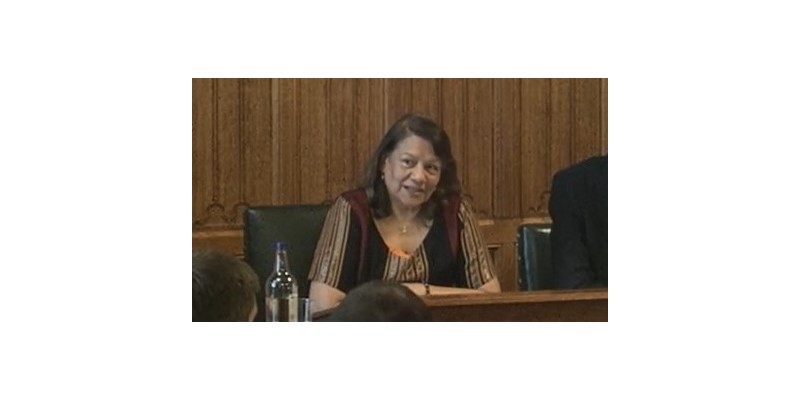
I chaired the Fifth Delegated Legislation Committee on Wednesday 4 March 2026: The Climate Change Levy ( Fuel Use and Recycling Processing Amendment Regulations 2026. Here is a full explanation of what the legislation proposed:
Climate change levy (“CCL”) is a tax on the supply of taxable commodities (electricity, gas and solid fuels) that are not for domestic or charity use. Taxable commodities that are classified as not being used as fuel are exempt from CCL. Taxable commodities that have mixed uses may also be classified as not being used for fuel. A mixed use is where a taxable commodity is partly used as a fuel and partly used for other purposes. This instrument exempts electricity used in electrolysis to produce hydrogen from CCL. It also exempts natural gas used partly as a source of carbon dioxide to produce sodium bicarbonate from soda ash. It does this by amending Parts A and B of Schedule 1 to the Climate Change Levy (Fuel Use and Recycling Processes) Regulations 2005 (S.I. 2005/1715) (“the principal Regulations”) so that their supply for use in the processes described are classified as non-fuel uses.
What is being done and why?
1 CCL is a tax designed to encourage energy efficiency. In keeping with that rationale, the non-fuel use exemption has always formed part of CCL on the basis that taxable commodities are exempt from the tax when they are not used for energy purposes.
2 When produced in a low carbon manner, hydrogen has the potential to support the government’s 2030 clean power and 2050 net zero ambitions. One method of producing low carbon hydrogen is via electrolysis of water. Presently, electricity used to produce hydrogen in this way is subject to CCL even though it is not used as a fuel. This puts this method of hydrogen production at a disadvantage compared to hydrogen production via steam reformation. The use of natural gas in the latter process is already exempt from CCL on the basis that it is not used as a fuel.
3 Presently, natural gas used as a source of carbon dioxide to produce sodium bicarbonate from soda ash is also subject to CCL, even though it is partly used as a non-fuel in that process. The use of natural gas as a source of carbon dioxide to
produce sodium bicarbonate from soda ash is a mixed use and its use as a raw material in that process is not “merely incidental” to its use as a fuel1. In the UK, the production of sodium bicarbonate via other methods ceased in 2025, in part because of high energy costs.
4 As a tax designed to encourage energy efficiency, it is consistent with the objectives of CCL for these uses of electricity and natural gas to be exempt from the tax. This would also support wider government objectives by removing an additional cost that could discourage investment in these production methods.
5 There is interest from industry in exempting these uses of electricity and natural gas.
What was the previous policy, how is this different?
6 The supplies of electricity and natural gas that will be exempted from CCL as a result of this instrument have not previously been exempt under the non-fuel use exemption. It is not known why electricity used in electrolysis to produce hydrogen was not exempted when CCL was first developed over 25 years ago, but recent negotiations with potential hydrogen production projects under the government’s Hydrogen Allocation Rounds2 (a separate government mechanism to help fund such projects) and therefore the expansion of the use of this process, have brought the issue to light now. Using natural gas as a source of carbon dioxide to produce sodium bicarbonate from soda ash is a new technology that did not exist when the principal Regulations were made or last amended.
Minister Dan Tomlinson introduced the legislation which was agreed.
Videos
Covid Memorial Wall
20mph Speed Limits
RAF Centenary Flypast