


Thank you for visiting my website. You will find information about my work and my activities as the Member of Parliament on behalf of the people of Walsall South. You can contact me directly through the website and find details about my office. Owing to Covid-19 I am unable to meet at surgeries, and I am now conducting telephone surgeries. I use the House of Commons Parliamentary answering service when my office is busy or out of hours. Please leave your message with them and remember to give your name, address and contact details. The Answering Service will send me an email with your message
If you have any problem or issue you think I may be able to help you with, please do get in touch.
Please note that Members of Parliament are not an emergency service so do contact the appropriate emergency services when required.
I would like to thank the NHS for their wonderful service during the pandemic.
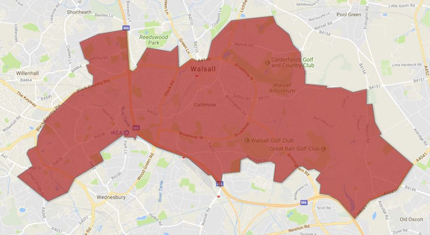
About Walsall South
Do you live in the constituency? Follow the link below to check that Valerie is your MP.
Press Releases
Keep updated with the latest news locally, media coverage and news from Parliament.
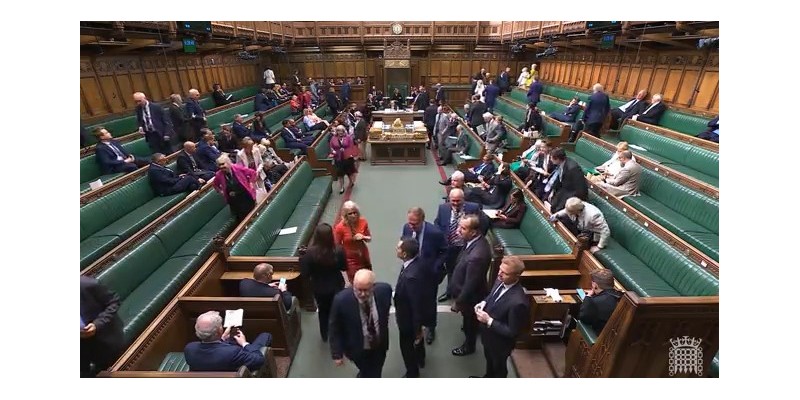
The Passenger Railway Services (Public Ownership) Act 2024 brought privately operated services back into public hands as contracts expired, this Bill will establish Great British Railways (GBR) – a railway owned by the public that offers a better deal for taxpayers. GBR will take decisions on what constitutes best use in a way that is fair, providing a role for open access operators while also being compliant with its duties, especially in respect of the need to grow rail freight on the network. The Government will also be compelled to set a freight growth target.
The House of Commons met to debate the Bill in its remaining stages on 10 June 2026.
Three amendments were voted on:
New Clause 1, which would have required the Secretary of State to lay a Passengers’ Charter and sets out what the charter should contain, including provision relating to customer amenities, value for money, accessibility and compensation, was rejected: Ayes 77, Noes 271.
Amendment 143 alongside Amendments 144 to 147 would have required GBR to continue to offer discounted rail fares for veterans, members of the UK armed forces and their families, or young people aged 26 to 30, and was rejected: Ayes 167, Noes 266.
Amendment 148, which would have changed the current appeals provision so that appeals can be decided on the merits, was rejected: Ayes 155, Noes 279.
The Bill passed its Third Reading: Ayes 278, Noes 149, and now goes to the House of Lords.
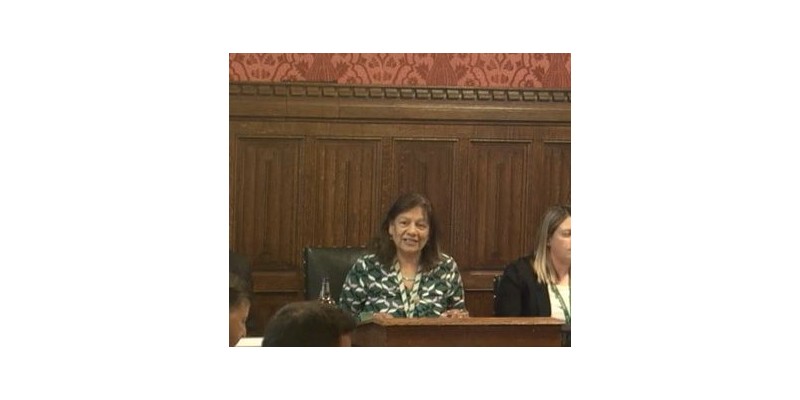
I chaired the Seventh Delegated Legislation Committee on 10 June 2026, the draft Scotland Act 1998 (Increase of Borrowing Limits) Order 2026. The Secretary of State for Scotland, Douglas Alexander MP, moved the debate.
This Order amends the Scotland Act 1998 to increase the resource borrowing limit set out in section 67(2) of that Act from £1.8m to £1.9m, and the capital borrowing limit set out in section 67A(1) from £3.14m to £3.27m. This Order revokes the Scotland Act 1998 (Increase of Borrowing Limits) Order 2025 which has been superseded by this Order. A full impact assessment has not been produced for this instrument as no, or no significant, impact on the voluntary or public sector is foreseen.
The order was agreed and the regulations came into effect immediately.
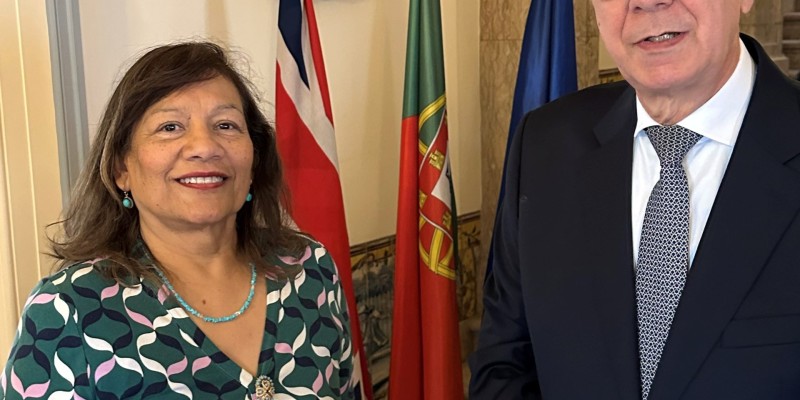
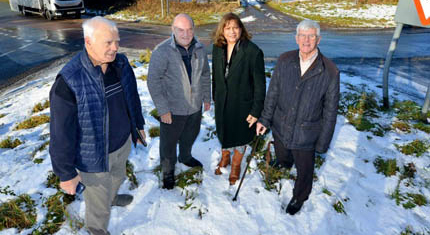
As Chair of the APPG on Portugal I was pleased to attend a celebration of the National Day of Portugal at the Residence of the Ambassador together with other guests who included the Papal Nuncio, the Vatican Ambassador His Excellency Fr Miguel Maury Buendia. (pictured left).
The Ambassador from Portugal to the UK Nuno Brito (pictured with me in the main picture and right) spoke about the long standing relationship between the ULK and Portugal and praised the fact that the Treaty of Windsor 1386, 740 year old treaty signed between the two nations is still in force. It is the oldest alliance still in force by political bi-lateral agreement.
It recognizes the day of the death of Luis Vaz de Camoes, the poet and national literary icon the author of the Lusiads, Portugal's national epic poem. The Ambassador said the past has gone, the future is unknown so we have to live in the present.
As Chair of the APPG, I will continue to ensure good relations between our two countries and longest allies.
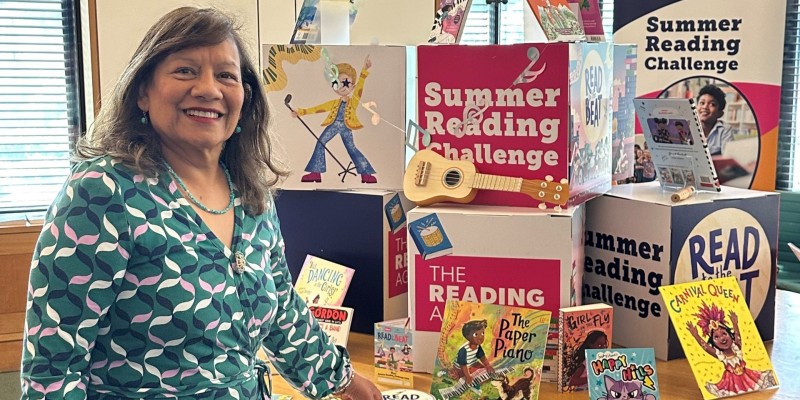
I was delighted to drop into the Parliamentary event held by the Reading Agency on 10 June 2026 to speak to Parliamentarians about the Summer Reading Challenge.
This year the Reading Agency's Summer Reading Challenge 2026 is about encouraging primary school children to get involved in this year's theme: Read to the Beat.
Children will be able to discover books inspired by a range of musical genres and cultures through a specially curated collection featuring fiction, non fiction poetry and graphic novels. There are free activities rewards and events taking place in libraries across the UK and offer children to keep reading throughout the summer holidays.
The Reading Agency partnered with the Universal Music Group UK and the illustrator Harry Woodgate.
This is the Year of Reading and many of our schools in Walsall and Bloxwich have their own libraries. I am encouraging everyone to visit their Library and talk to the Librarian who is there to help discover all sorts of books.
https://readingagency.org.uk/
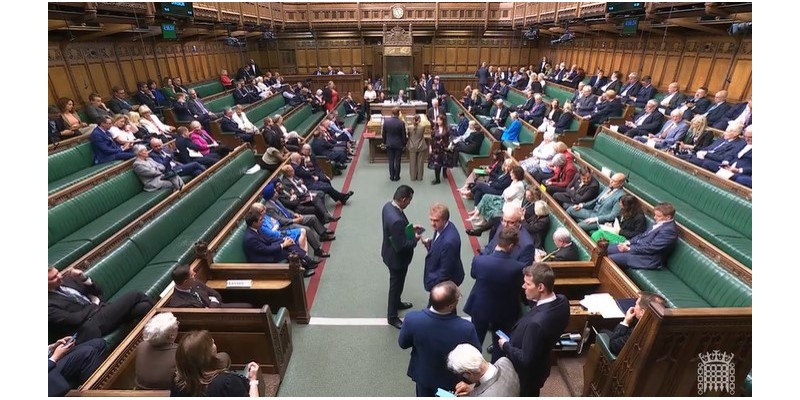
This Order refers to changes made in the English Devolution and Community Empowerment Act 2026 and covers elections for combined authority mayors and combined county authority mayors. These elections are currently conducted using the First Past the Post (FPTP) voting system. Under this system, the candidate who wins the most votes is elected. Combined authority mayor elections were originally held under the supplementary vote (SV) system before being changed to FPTP following changes made in the Elections Act 2022.
The instrument amends the voting system for these elections from FPTP to SV when there are three or more candidates standing.
The Order was passed: Ayes 356, Noes 86
Videos
Covid Memorial Wall
20mph Speed Limits
RAF Centenary Flypast