


Thank you for visiting my website. You will find information about my work and my activities as the Member of Parliament on behalf of the people of Walsall South. You can contact me directly through the website and find details about my office. Owing to Covid-19 I am unable to meet at surgeries, and I am now conducting telephone surgeries. I use the House of Commons Parliamentary answering service when my office is busy or out of hours. Please leave your message with them and remember to give your name, address and contact details. The Answering Service will send me an email with your message
If you have any problem or issue you think I may be able to help you with, please do get in touch.
Please note that Members of Parliament are not an emergency service so do contact the appropriate emergency services when required.
I would like to thank the NHS for their wonderful service during the pandemic.
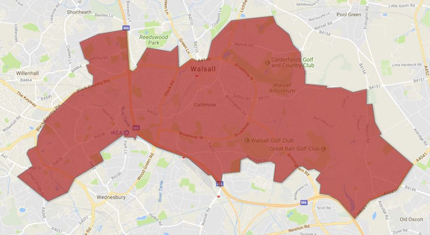
About Walsall South
Do you live in the constituency? Follow the link below to check that Valerie is your MP.
Press Releases
Keep updated with the latest news locally, media coverage and news from Parliament.
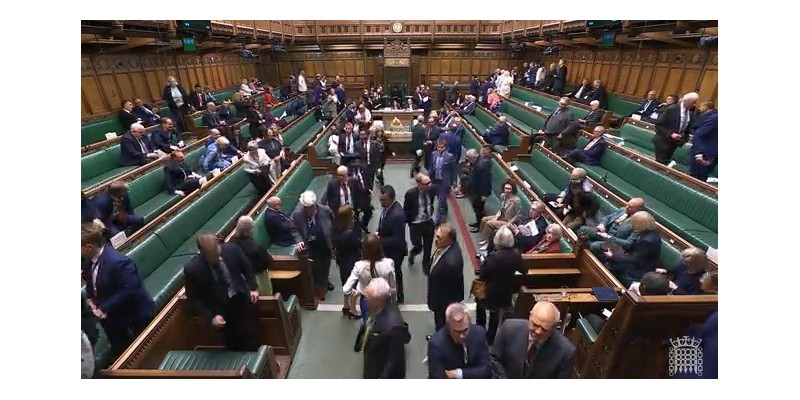
On 20 May 2026, was the last day for debates on the King's Speech. Any topic relating to the speech can be debated, the Speaker of House of Commons selected three amendments to the speech from the Conservatives, Liberal Democrats and Reform.
The following Conservative amendment was not agreed (Ayes 104, Noes 317):
to add ‘but respectfully regret the absence of a Defence Readiness Bill from the Gracious Speech, and the 10 month delay to the publication of the Defence Investment Plan; call on the Government to bring forward both as a matter of urgency; further call on the Government to raise defence spending to 3% of GDP by the end of this Parliament; further regret that the Gracious Speech commits to re-starting inquests into Northern Ireland veterans; and also call on the Government not to progress with the Northern Ireland Troubles Bill and the Northern Ireland Troubles (Legacy and Reconciliation) Act 2023 (Remedial) Order 2025 to protect veterans and improve the morale of all who serve in the armed forces.’.
The Liberal Democrat amendment was not agreed (Ayes 78, Noes 408):
to add ‘but respectfully regret that the Gracious Speech fails to outline proposals to negotiate a UK-EU Customs Union; and call on the Government to open negotiations with the EU on creating a UK-EU Customs Union, to start fixing the damage done to the British economy by the Trade and Cooperation Agreement.’.
The final opposition amendment from Reform was also not agreed (Ayes 104, Noes 316):
to add ‘but respectfully regret that the Gracious Speech does not include a commitment to grant new oil and gas exploration licenses in the North Sea which would boost energy security, and instead restricts the UK to existing drilling operations; believe that it fails to defend the right to trial by jury, which is a cornerstone of justice with origins stretching back to the Magna Carta; further regret that it includes proposals for digital identification; also regret that there are no protections for brave British veterans who served for Queen and country in Northern Ireland; further believe it fails to protect small businesses from rising energy costs and business rates, and fails to attract new investment in high streets; regret that it allows for greater alignment with the EU which betrays the democratic result of the referendum in 2016 and betrays the fishing industry and the agricultural sector; and note that it does not explicitly include SEND provisions to preserve access to an appropriate range of placements to support families and schools whilst ensuring parental oversight.’.
The main question, that the following humble address be presented to His Majesty, was put:
Most Gracious Sovereign,
We, Your Majesty’s most dutiful and loyal subjects, the Commons of the United Kingdom of Great Britain and Northern Ireland, in Parliament assembled, beg leave to offer our humble thanks to Your Majesty for the Gracious Speech which Your Majesty has addressed to both Houses of Parliament.
The House divided and the question was agreed: Ayes 307, Noes 171. The address is to be presented to His Majesty by MPs who are in the Privy Council or members of His Majesty's Household.
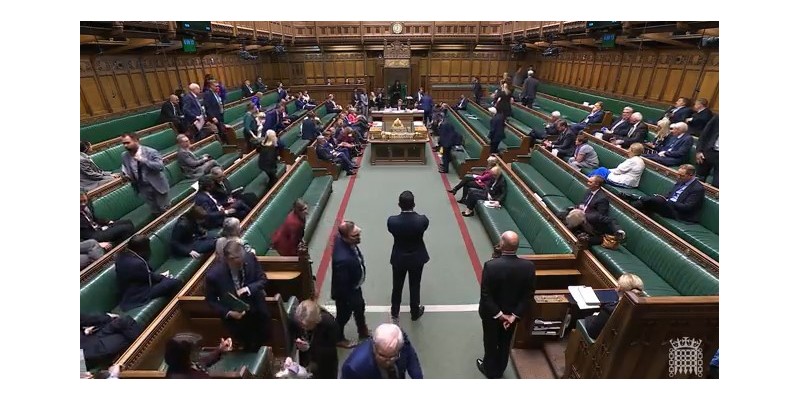
In the King's Speech on 13 May 2026 the Energy Independence Bill was announced, to scale-up homegrown renewable energy and protect living standards for the long-term. The speech also included a commitment to take forward recommendations of the Nuclear Regulatory Review in 2025 and introduce the Nuclear Regulation Bill to encourage a new era of British nuclear energy generation. Following the speech, there are 5 days scheduled for debate where any topic relating to the speech can be debated.
On 19 May 2026 the House of Commons debated the following Conservative amendment to the speech:
to add ‘but respectfully regret that the Gracious Speech commits to banning the issuance of licences to explore new oil and gas fields; recognise that this proposal will have a particularly negative impact on Aberdeen, the North East of Scotland and the wider UK economy; believe instead the Government must approve the Rosebank oil field and the Jackdaw gas field, which would boost UK energy security; urge the Government to drop its opposition to new oil and gas licences and instead legislate for a presumption in favour of approving new licences, and permit the exporting of oil and gas technology overseas; further regret the cancellation of a third large-scale nuclear power plant at Wylfa; and further urge the Government to abolish the ‘carbon tax’ regime to avoid more refinery closures, protect the domestic supply of refined products, and reduce the tax burden on UK industry.’
The amendment was not agreed: Ayes 108, Noes 323.
The debate was suspended and will be continued on 20 May 2026.
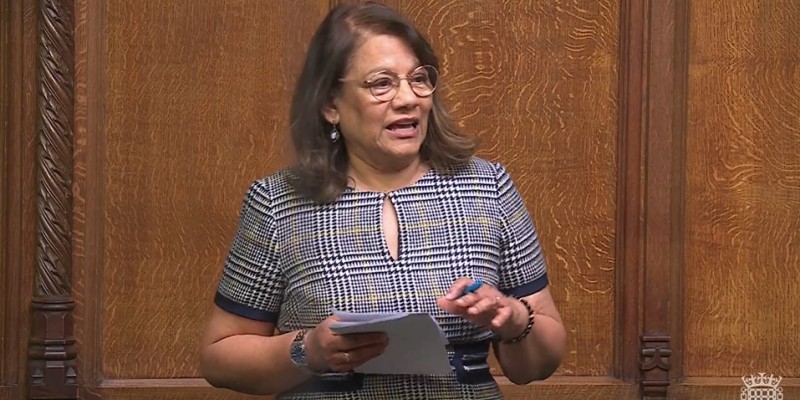
I spoke on the day following the King's Speech which outlines the Government's future legislative programme. There are 5 days of debate and I spoke on Thursday 14 May 2026: here is my speech:
"It is a pleasure to follow the shadow Secretary of State, the hon. Member for Faversham and Mid Kent (Helen Whately). I will try to address some of the points she made, but I am bound to mention the recent elections. Engaging in the democratic process is important, but not all areas had elections. The turnout across the wards in Walsall and Bloxwich was an average of 38%. I want to put on record my thanks to all the councillors who served their community in Walsall and Bloxwich.
The leader of Reform, the hon. Member for Clacton (Nigel Farage), thought that Walsall council was Labour-controlled, but it was not; it was controlled by the Conservatives—I know it might be slightly difficult to see constituencies from a helicopter. Some of his candidates said that they had to pay to personalise their leaflets. The £5 million gift is quite interesting as he says it is for his personal safety. I know that Mr Speaker and all the Deputy Speakers take the safety of each and every one of us in this Chamber very seriously.
The Representation of the People Bill is a carry-over Bill, so there is still time to ensure that we have compulsory voting and that we prevent cryptocurrency and bitcoin being used for donations to political parties—say, from Thailand—particularly from donors who go under two different names.
I welcome the announcement in the Gracious Speech on improving our cyber-security defences. I do not know whether Members saw this, but there was an investigation by a consortium of journalists from The Guardian, Der Spiegel, Le Monde, The Insider, Delfi and VSquare about a Russian school called “Department 4” that provides special training on hacking and password attacks. A hacker unit known by western Governments as Sandworm is accused of unleashing destructive cyber-attacks targeting, for example, Ukraine’s power grid, the French presidential election in 2017 and the investigation of the Salisbury poisonings. That article was published on 7 May, and it is worth reading. We need to protect our democracy from the constant drip, drip of misinformation and disinformation on online fora.
I welcome the energy independence Bill in the Gracious Speech. We have seen how we have been at the mercy of other countries, but now we are investing in renewables, which will protect our planet, roll out energy efficiency and bring down bills."
"I welcome the energy independence Bill. Let us see what is in the clauses when it is published, but the Secretary of State wants to make this country independent of outside forces. This is the first time a Government have invested so heavily in renewables. All this will get Britain working.
It is outrageous that oil companies have made massive profits and traders have bet on the outcome of war in Iran as petrol prices go up. Someone somewhere is making money, and it is not my constituents. They may not even know who is making the money, yet they blame us."
"We are the United Kingdom of Great Britain and Northern Ireland, so it is very important that we all work together. When it comes to climate change policies, we cannot specify a particular area; they are for our whole country, and our whole planet.
Those of us who were around at the time of Brexit—and I am pleased to see an EU Bill in the King’s Speech—will remember that we were allowed to see the impact assessments only if we left our phones behind and went across the road with just a pencil and paper. There we saw the impact assessments for each sector, and how leaving the EU affected every single one; we knew how important it was. The Federation of Small Businesses has warned that post-Brexit red tape and costs are driving smaller companies out of European markets. In a survey of 645 businesses, 30% indicated that they might reduce or cease trading in the EU without eased regulations. Many small businesses—64%—reported issues with customs documentation, 21% reported issues with physical inspections and 17% reported issues with product marking. To get Britain working, we need a closer relationship with our nearest market. If these small businesses close, working people and all of us lose out.
I believe in the dignity of work. The hon. Member for Faversham and Mid Kent mentioned that there is no welfare Bill in the Gracious Speech, but measures have already been taken to increase the national minimum wage, rights at work and safety at work. We will get Britain working with the new work coaches and the right to try.
I do not know whether Members have seen the television programme “The Pitt”, but in season two, a construction worker has to be taken to A&E and cannot afford his medical care, which is about $20,000. Watching that, we all know how lucky and blessed we are that we have our NHS, free at the point of need. We give people dignity when they fall ill. We take it for granted that our doctors and nurses are trained to the highest level. The NHS modernisation Bill will bring back the Department of Health and Social Care as one Department with accountability to the Secretary of State. There will not be the extra cost of NHS England; instead, there will be more money for the frontline.
I have found some money down the back of the sofa, so I hope the Chancellor is listening. Fifty million pounds has been allocated for a free school in my constituency that, on the evidence, is not needed. Toggle showing location of The National Audit Office has reported falling rolls in primary schools, and that fall in numbers will feed into secondary schools. I was told that the decision about the school was made in 2017. There was a Walsall priority education investment area programme, and the Windsor Academy Trust just so happened to have a member on the programme’s board. Surprise, surprise—it got the contract for the free school. It is like insider trading with public money. A review was undertaken, but Ministers are pressing ahead with the decision. I am not sure why, when schools like Joseph Leckie, Blue Coat academy and All Saints academy require support for their buildings, as do many other schools. Despite what the evidence shows, there will be building on Reedswood Park, which is not what local people want. It is the same with the Walsall Leather Museum, a beloved local cultural and heritage icon; the deal with the then Conservative-controlled council was a novel and contentious transaction, made against the wishes of visitors, constituents and Government policy on promoting arts and culture. The museum must be retained in its current position.
I believe in the dignity of education, which is why I welcome the Bill to raise education standards for all. We already have Best Start hubs in train—we know what a difference Sure Start made—and breakfast clubs. Anyone who has visited breakfast clubs knows that there is a glorious cacophony of excited children who have had a good meal. There are also quiet places, and I am pleased that some are taking part in the year of reading. Children are set up for the day. We cannot measure the results of a good education tomorrow; we have to see the benefits over a lifetime. I believe in the dignity of opportunity, and that is what this Government are giving people. We give people the tools to find and exploit their talents. Many do not know what their talents are when they start off in life, and they want to discover them over the years. That is how we get Britain working.
We live in a society where, if we see something we want, we can buy it, and it is with us the next day, but Governments do not operate in that way.
I want to end with a story about three workers constructing a road. When they were asked what they were doing, the first one said he was breaking stones; the second one said that he was constructing a road; and the third one said that he was constructing a road that would take children to their school, or the sick to hospital.
We have to show people the significance of the actions that the Government are undertaking, so that they are like the third worker.
Equality, opportunity, skills, justice and tolerance take time, patience and perseverance. We need to explain to people that our Government are standing up against vested interests and for all our citizens, and that is why I support the measures in our sovereign’s Gracious Speech."
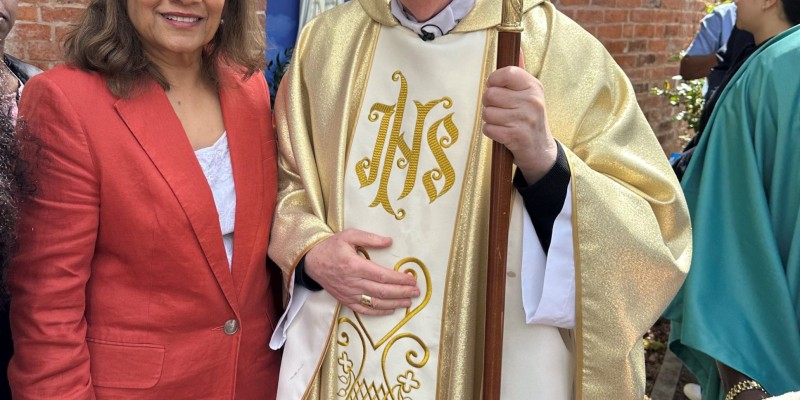
I was pleased to attend the Inauguration Mass at St Mary's the Mount Catholic Church on Sunday 10 May 2026.
This was a celebration of the first Catholic Church built after the reformation in 1827 and is the oldest Catholic Church in the West Midlands. St Mary's the Mount is 200 years old.
The Mass was presided over by His Grace Archbishop Bernard Longley, Archbishop of Birmingham. Fr Jobin is the residing priest at St Mary's and has organised this special event. It was good to see the community meet at the Mass and in the Garden after the Mass.
His Grace then blessed the Marian Shrine.
The Marian Shrine
A further letter was sent to the the Secretary of State and the Minister:
Videos
Covid Memorial Wall
20mph Speed Limits
RAF Centenary Flypast