


Thank you for visiting my website. You will find information about my work and my activities as the Member of Parliament on behalf of the people of Walsall South. You can contact me directly through the website and find details about my office. Owing to Covid-19 I am unable to meet at surgeries, and I am now conducting telephone surgeries. I use the House of Commons Parliamentary answering service when my office is busy or out of hours. Please leave your message with them and remember to give your name, address and contact details. The Answering Service will send me an email with your message
If you have any problem or issue you think I may be able to help you with, please do get in touch.
Please note that Members of Parliament are not an emergency service so do contact the appropriate emergency services when required.
I would like to thank the NHS for their wonderful service during the pandemic.
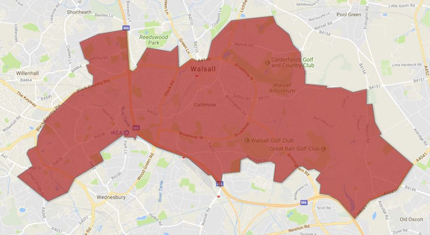
About Walsall South
Do you live in the constituency? Follow the link below to check that Valerie is your MP.
Press Releases
Keep updated with the latest news locally, media coverage and news from Parliament.
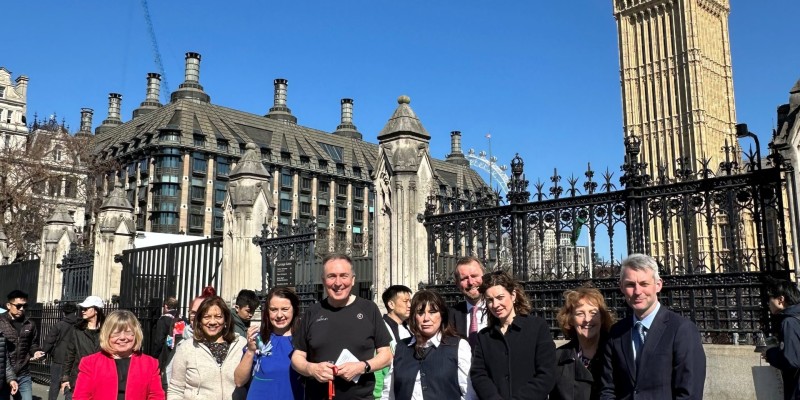
Parkrun UK, the organisation behind the weekly runs in local communities, held a launch event in Parliament on 2 April 2025 to promote the new Parkwalk initiative before the national launch on 26 April 2025. I was with my Colleagues Nick Smith MP Chair of the APPG John Slinger MP Chair APPG on Running.
Most people in Walsall know that Parkrun takes place at the Walsall Arboretum.
Parkwalk will encourage people to walk in local parks and green spaces. The figures from October 2024 show that Parkrun events held in over 2500 locations across 23 countries engaged approximately 300,000 runners and 40,000 volunteers each week. By November 2023 Parkrun recorded its 100 millionth participation. With the launch of Parkwalk, it is hoped participation will increase as more people can take part.
I am pictured (below) with the founder of Parkrun UK, Paul Sinton-Hewitt CBE, who first set up Parkrun with his friends in 2005.

The Secretary of State for Education, the Rt Hon Bridget Phillipson MP made a statement to the Commons on Wednesday 2 April 2025 to announce £37 million for 300 primary schools to open and expand nurseries.
I am delighted that Busill Jones Primary in Bloxwich is one of the 300 schools that have been granted funding in this first wave.
The School-Based Nursery Capital Grant will open and expand 3000 school-based nurseries. The first 300 announced will create up to 6000 places, with 4000 set to be available by the end of September.
In her announcement, the Secretary of State said that the final stage of the 30-hours-a-week childcare entitlement will begin in September. Working parents of children from 9 months old to 4-years-old will get 30 government funded hours of childcare a week.
Together with free breakfast clubs this gives our children a great start to their day and parents will know their children are in a safe place with a healthy breakfast for a good start to the day.
Here is the Secretary of State's full statement:
"With permission, I will make a statement to update the House on the roll-out of nurseries in our primary schools.
This Labour Government are bringing the change that families deserve. We made promises to the parents and children of this country and, not nine months in, we are acting to deliver on them. Free breakfast clubs are already being rolled out, the curriculum and assessment review is in full swing, and children’s social care is seeing the biggest overhaul in a generation. We have funding for 10,000 new places for pupils with special educational needs and disabilities, backing for up to 10,000 more apprentices to qualify, new improvement teams for our schools and a new allowance for our kinship carers—promises made, promises kept. Here, today, we go further.
This £37 million in funding for 300 primary schools to open and expand nurseries is a big step towards delivering 3,000 nurseries for schools, a big step towards delivering childcare for parents and a big step towards delivering the best start in life for all our children. I want that best start in life for every child, because I want opportunity for every child. I want every child in every village, town and city across our country to grow up knowing that success belongs to them. That is the kind of country I want to live in—the country that this Labour Government want to build, with opportunity not just for some, but for all our children.
To achieve that, we need to start early, before university or college, and even before school—in the earliest years of our children’s lives. Those years are fundamental to opportunity. That is where gaps in learning and development first appear, and the longer we wait, the wider they grow and the harder they are to close. That is why, when I am in schools, colleges and universities—even in those places—they agree that the biggest chance to make an impact on our children’s lives sits in those crucial early years. That is why this is my No. 1 priority.
If we get this right, and we set all children on the track to success, that is where they will stay. That is why, despite the huge fiscal challenges that we inherited from the Conservatives, we chose to invest more than £8 billion in the early years at the last Budget. It is why the early years are a central part of the Prime Minister’s plan for change, setting the target of a record share of children starting school ready to learn. That is why I am today announcing the 300 schools that will be delivering our first wave of new and expanded school-based nurseries. Many of these school-based nurseries will serve communities facing big challenges, where there is strong evidence of need. Overall, it means up to 6,000 more nursery places for young children where they will have the biggest impact, with most of them starting in September this year. That is vital, because that is when the final stage of the 30 hours a week childcare entitlement will kick in. When that is joined up with the offer for three and four-year-olds, working parents of children from nine months right up to the beginning of school will get 30 Government-funded hours of childcare a week.
The 300 schools are just the start. It is 300 on the road to 3,000 school-based nurseries. We will work with schools, voluntary and private providers, teachers and local partners to find and spread what works. By the end, it will mean that tens of thousands more parents have the power to choose the hours they want to work.
What a contrast with the Conservatives, because what we inherited was not just an offer that they had not bothered to fund, but a pledge without a plan, with places, promises and provision missing. Parents made decisions on the back of those promises. Again and again, I hear from parents how much they have been relying on the promises that the previous Government scattered about like confetti. Across our country, this Government are delivering change in months, when the last Government waited 13 years before signing a post-dated cheque.
The changes that we are making will give parents more control over their lives, time to choose their working hours and money back in their pockets. The last Coram report showed that the effects are starting to flow through. Childcare costs for under-threes in England have halved since the expansion, but ultimately childcare and early years education is about children. It is about launching a lifetime of learning and starting as we mean to go on, so as we roll out these school-based nurseries, we are also adding the biggest ever uplift to the early years pupil premium, closing the attainment gap and giving every child the support that they need to learn and grow, and we are supporting early years educators to build their expertise.
It is not just what is taught in those nurseries that counts, but where they are located: they are in primary schools, which is no accident. We are centring schools in their communities, starting early, working with the voluntary sector and private providers too, so that the move from nursery to school is a natural step, from one room to another, sometimes even in the same building, as is the case at St Anne’s church academy in Weston-super-Mare. Having a nursery on site means that stronger, longer lasting relationships with families can be built. Parents feel that they are part of the community, so they engage more when their child starts nursery and then moves into school. When their child starts reception, there are no big, scary changes, building the sense that school is where they are meant to be.
I saw that powerfully this week when I went to Peterborough to visit Fulbridge academy. Little Oak nursery sits at the heart of the school. While I was there, I spoke to Hannah, a working mum whose little boy, Nile, goes to the nursery. She told me all about the difference that Little Oak was making to her family, and about how her son is making friends and taking big strides in his learning, ready to join his two older siblings at school in September. The nursery plays a big part in making Fulbridge academy the centre of that community.
It is the same for free breakfast clubs, which is why we announced the 750 early adopters this year. Schools are the beating hearts of their communities, where children come together to eat, learn and grow. It is good for attendance and achievement, for behaviour and belonging, and for children and their life chances. That is the point: this is action for them, to give them the start that they deserve, because that is my No. 1 priority, built on a
deep and fierce commitment to the children of this country in the first years of their lives, taking their first steps into the world.
In our youngest children’s faces and in the faces of all who work with them, we see something that for so long has been missing from our country: hope. We see the hope of a brighter and better future, the hope of a secure and prosperous world, the hope that tomorrow can be better than today and the hope that this is a Government that are on their side. That is the future that we shape together, not face alone. That is the hope that so many people in our country have—that our best days lie ahead of us. That is what the people of this country chose in the general election last July, when they chose hope over fear, and chose a brighter tomorrow, not a bitter yesterday.
And that is why I am so focused on getting on and delivering change, because it matters so much for lives now, not in some distant future. Early years are where futures are made, where life chances are won and where healthier societies are built. That is the prize on offer. Our youngest generation is the first generation for whom opportunity is open to all, right from the start, and I know that Members from across the House will agree that that is a prize worth fighting for. I commend this statement to the House."
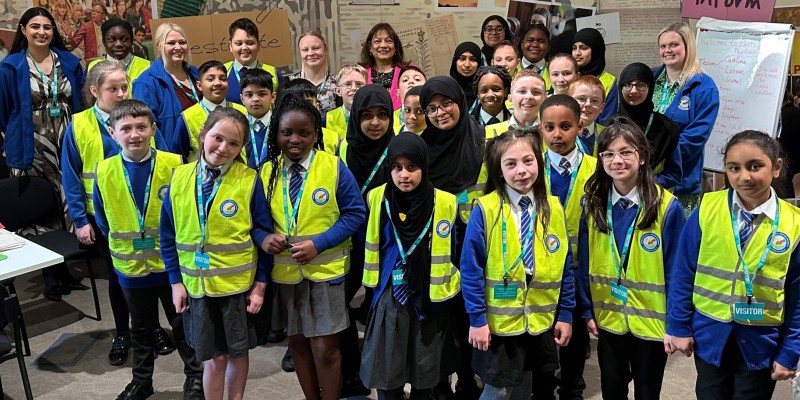
North Walsall Primary Academy in Blakenall, has around 250 students from Nursery to Year 6. Year 5 and Year 6 with Head of the Academy Sabrina Khera (pictured) visited the Education Centre on 2 April and were given the background to how Parliament works.
It was great to see how the children understood the passage of the Bill. They understood that people vote for their MPs and a Bill goes through the Commons and the Lords including "ping-pong" where bills can go forwards and back between the Commons and Lords. On one table "the people" were at the start of the democratic process and at the end of the process where the Act affects them.
I spoke about my work in Parliament and in the constituency dealing with legislation and cases that arise in the constituency which covers Walsall&Bloxwich.
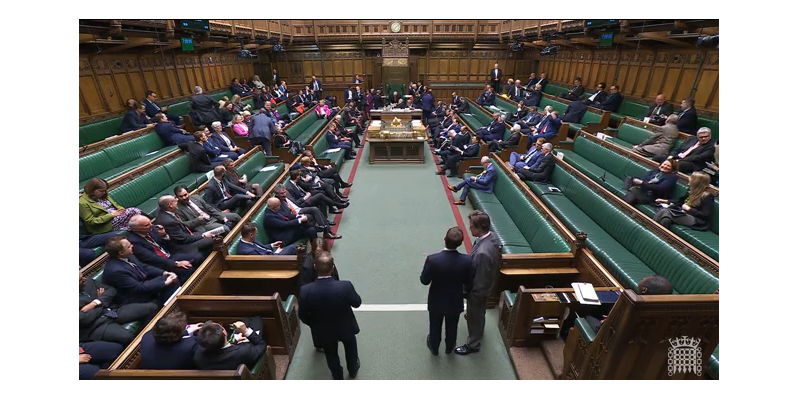
On 1 April 2025 the Bill had its at Second Reading in the Commons.
The Bill was initially introduced in the House of Lords on 4 September 2024 and first read in the Commons on 13 March 2025.
On leaving the EU, the UK set up an independent regime for a product safety and metrology framework. The Bill intends to ensure the UK is better placed to address modern day safety issues to protect consumers, adapting to new technologies such as Artificial Intelligence (AI), as well as reflect the shift in both what consumers buy and how they buy it.
The amendment to the Bill was defeated Ayes: 110 Noes 302, the question was put that the Bill be read a second time and passed its Second Reading :
Ayes 303, Noes 110.
The Bill now goes into a line-by-line scrutiny by a Bill committee.
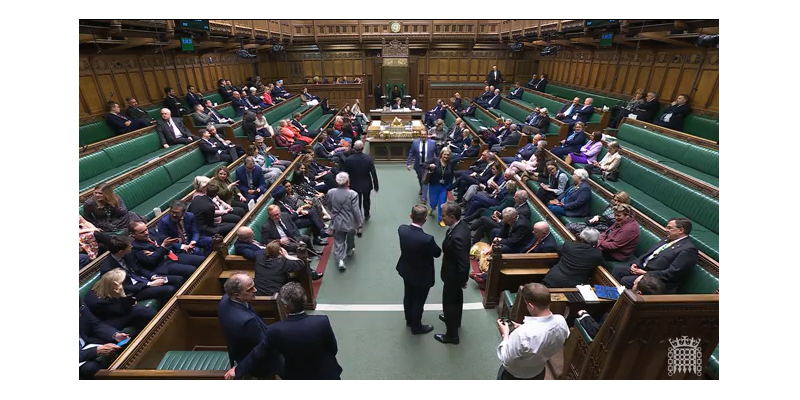
Since leaving the EU, the legal framework set out in the Agricultural Act 2020 sought to phase out annual payments under the Basic Payments Scheme (BPS) over a seven-year period until 2027, replacing the BPS with delinked payments that are not based on the size of land owned by an individual. These Regulations continue the annual reductions made to this payment scheme.
On 31 March 2025 the Regulations were voted on as the Opposition parties wanted to put this SI to a vote: The result: Ayes 296, Noes 164.
Videos
Covid Memorial Wall
20mph Speed Limits
RAF Centenary Flypast