


Thank you for visiting my website. You will find information about my work and my activities as the Member of Parliament on behalf of the people of Walsall South. You can contact me directly through the website and find details about my office. Owing to Covid-19 I am unable to meet at surgeries, and I am now conducting telephone surgeries. I use the House of Commons Parliamentary answering service when my office is busy or out of hours. Please leave your message with them and remember to give your name, address and contact details. The Answering Service will send me an email with your message
If you have any problem or issue you think I may be able to help you with, please do get in touch.
Please note that Members of Parliament are not an emergency service so do contact the appropriate emergency services when required.
I would like to thank the NHS for their wonderful service during the pandemic.
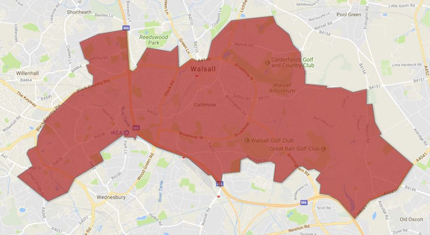
About Walsall South
Do you live in the constituency? Follow the link below to check that Valerie is your MP.
Press Releases
Keep updated with the latest news locally, media coverage and news from Parliament.
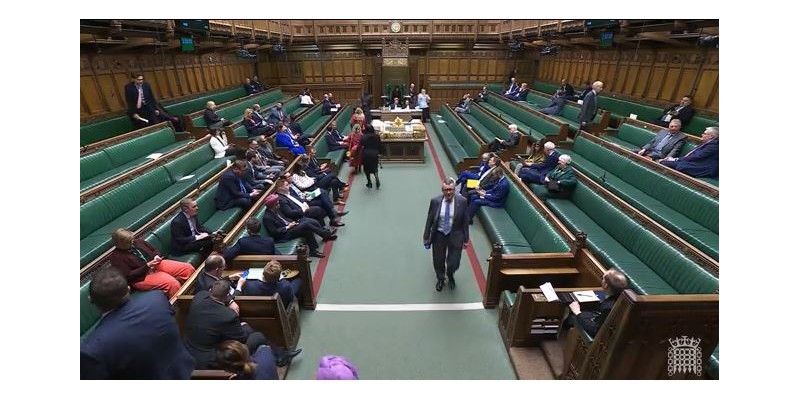
On 25 March 2025 the National Insurance Contributions (Secondary Class 1 Contributions) Bill returned to the House of Commons after further amendments from the House of Lords. The Commons rejected the Lords' first round of amendments on 19 March 2025.
The Bill intends to raise employers’ national insurance contributions to 15%, lower the secondary threshold to £5,000, and increase the employment allowance to £10,500. There were 4 amendments selected for debate and votes:
I voted in favour of the following motions to disagree: 1 Lords Amendment 1B Ayes 312, Noes 190; 2 Lords Amendment 5B Ayes 311, Noes 192;
3 Lords Amendment 8B Ayes 313, Noes 194; 4 Lords Amendment 21B Ayes 314, Noes 196.
The Bill as amended goes back to the Lords to reconsider the Commons vote.
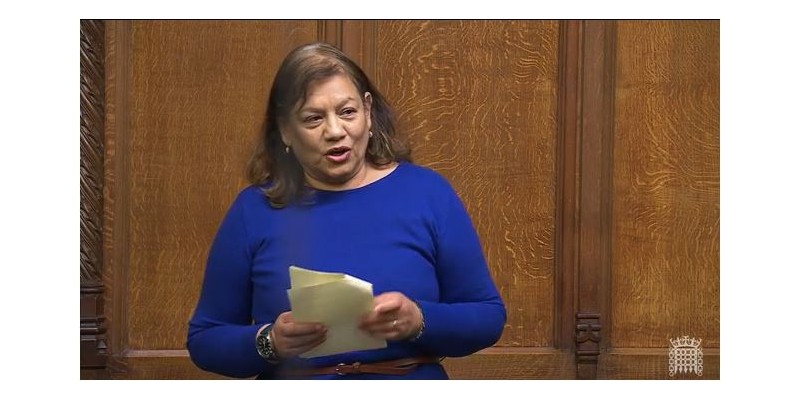
I spoke in the debate on the Second Reading of the Planning and Infrastructure Bill on Monday 24 March 2025. It gave me an opportunity to raise concerns about the procedure of planning decisions. You can read my speech in full below:
"As we heard from the Secretary of State and Deputy Prime Minister, this is rightly an ambitious Bill, with 97 clauses and six schedules. I will focus on part 2, which deals with planning decisions, because it is important for our constituents and because in the past I undertook planning cases for the Treasury Solicitor’s Department, when our client, the Planning Inspectorate, was affectionately known as PINS—just the pins; no needles.
Careful thought needs to be given to the transparency of decisions. The Deputy Prime Minister mentioned consultation. Some local authorities count abstentions as a vote in favour while others do not, so will she consider introducing a standard process throughout the country? I hope that all decisions will be based on judicial review principles, whether they are made by a committee or by individual officers.
Clause 45 concerns training for local planning authorities. I know that there are committee members who, even after being given some training, would not know a material consideration if it hit them in the face. Given that some of the decisions may be controversial, our constituents need to be reassured that they can have confidence that the system is rules-based and features procedural fairness, adequacy of reasoning and no actual or apparent bias. Decisions must meet this test: would a fair-minded and informed observer, having considered the facts, conclude that there was a real possibility that the decision maker had taken into account relevant considerations, and had not taken into account irrelevant considerations?
Let me set out five important issues that apply to either a committee or a planning officer. First, if the decision is delegated to a planning officer, the officer should have undertaken a site visit and it should be recorded. Secondly, all votes in the committee should be recorded, which is not the case now. When we ask our constituents, “How did your councillor vote?”, they are often unable to say. Thirdly, fees are ringfenced under clause 44, but documents should be available to members of the public. At present, people cannot see them all unless they are online; I had to look in three different places to find a highways report. There should still be a physical file that the public can consult. Fourthly, I hope that Ministers will consider term limits for the chair of planning.
Finally, there is the issue of transparency, which is one of the most important elements. There should be a proper procedure so that everyone, throughout the country, follows the same procedure and it is adhered to. I remember that just before the new NPPF, there was a decision involving a takeaway. The public health representatives said that there were no comments and the highways authority representatives said that there would be no impact and then changed their minds after speaking to the applicant. It is important for decisions to be transparent.
I welcome the strategic look at sites. Certain areas, such as mayoral districts with combined authorities, may be more convenient than others.
I absolutely agree; it is always “brownfield first”. I am about to say something about the green belt, but first I should make the important point that local people should not be shut out of any statutory consultation. They, and other statutory consultees, must be included in the process.
Green belt should be protected, although in some cases infill on the edges of villages and other areas is acceptable. However, I must add that Walsall does not want to be joined up to Birmingham.
I also want to raise the issue of buy to let. I hope the Deputy Prime Minister will speak to her colleagues in the Treasury about the fact that buy-to-let companies have become the largest single type of business in the UK. There are more companies set up to hold properties registered with Companies House than any other kind. Homes are for people to live in.
I ask those on the Front Bench to remember Walter Segal and Moran Scott, and the Segal method house that people built for themselves in the 1970s with the Lewisham Self Build Housing Association. They were pop-up timber houses. Pockets of land were found and people were empowered.
I know you are looking at me, Madam Deputy Speaker, so I will conclude. The planning system should not exclude the voices of our constituents, who will have to live with the consequences of any development. Development should be for the common good and for future generations, taking into account the climate crisis. I know that the ministerial team are up to the task."
The Bill, first introduced to the House of Commons on 11 March 2025, seeks to speed up and streamline the delivery of new homes and critical infrastructure by introducing reforms for electricity grid connections, planning processes, compulsory purchase, and development corporations. Additionally, it enhances nature recovery funding, local planning authority capacity, and strategic planning for England.
The question was put that the Bill be read a second time and passed with the result: Ayes 330 Noes 74.
The Bill will now go through line-by-line scrutiny in a Public Bill Committee.
Thank you for contacting me about the upcoming reforms to the disability benefits system.
After 14 years of damaging Conservative rhetoric on benefits and cuts, people are understandably fearful when they hear about changes to the benefits system. I want to let you know that the reforms announced by the government will not result in any immediate changes to anyone’s benefits. We need a welfare state that is there for all of us when we need it, now and in the future, that protects those most in need, and that delivers equality and dignity for all. There will always be some people who cannot work, and I assure you that we will protect them. However, the broken welfare system we inherited from the Conservatives is failing the very people it was designed to help and holding our country back. Many sick and disabled people want to work, and they deserve the same choices and chances as everyone else to do so. Instead, the Conservatives wrote off hundreds of thousands of people and blamed them for an unsustainable rising benefits bill. Instead of providing people the support they needed to get into work, they prioritised cheap headlines.
The Government is already tackling the drivers of people being out of work and supporting people into good jobs. We’re investing an additional £26 billion in the NHS to drive down waiting lists, making work pay with our landmark Employment Rights Bill, and introducing the biggest reforms to employment support in a generation, with our £240 million Get Britain Working Plan. The Secretary of State for Work and Pensions has announced that we’re going even further, investing £1 billion into employment support. This is one of the largest ever investments in support to increase opportunities to work for sick and disabled people, guaranteeing high quality, tailored support to get people on a Pathway to Work. This will come alongside a package of reform to support people into jobs and make the broken system fairer and more sustainable. I’d like to highlight a few of these measures that will make a significant difference to our country and people’s life chances.
First, we are addressing the perverse financial incentives that hold people back from work under the current system by rebalancing the payments in Universal Credit. This means that we are increasing the standard allowance above inflation for the first time ever, with a £775 cash increase per year by 2029/30 for existing and new claimants, while reducing the health top up for new claims from April 2026, alongside active support to help people back to health and work.
Alongside this, we will remove barriers by ensuring that going back to work in and of itself will never lead to a reassessment. This ‘right to try’ will give people the confidence to take on job knowing that if it doesn’t work out, they won’t have to start from scratch. In addition, we are consulting on a new unemployment insurance that will help people quickly get back on track if they fall out of work, giving them a higher rate of benefit. It’s also important to point out the measures we have announced to protect those who are most in need. We will protect existing Universal Credit claimants by holding their health top-up steady in cash terms while they benefit from the higher standard allowance. We are also looking at ways to ensure that those who will never be able to work are afforded confidence and dignity by never having to go through reassessments and proposing an additional Universal Credit premium to offer those people the support they need.
I am setting out some responses to possible questions you may have:
Will I still get my payments as normal? Yes, please be assured there will be no immediate changes to your health and disability related benefit payment. For more information about the proposed changes to health and disability benefits please visit www.gov.uk and search for DWP green paper.
Will my claim be affected? No, there will be no immediate changes to your health and disability-related claim. If you have made a claim or are getting a health and disability-related benefit you should continue to contact us as usual and provide any information or changes to your circumstances and current needs. For more information about the proposed changes to health and disability benefits please visit www.gov.uk and search for DWP green paper.
When will the changes to health and disability benefits be made? We are consulting on our proposed changes to health and disability benefits. The consultation will be open for at least 12 weeks and no changes will be made until we have reviewed all the responses. You are welcome to take part in the consultation at www.gov.uk. Search for DWP green paper. For more information about the proposed changes to health and disability benefits please visit www.gov.uk and search for DWP green paper.
Will my benefits change immediately? No, please be assured there will be no immediate changes to your health and disability related benefit payment. For more information about the proposed changes to health and disability benefits please see Pathways to Work: Reforming Benefits and Support to Get Britain Working Green Paper
I’ve submitted a claim but haven’t heard the outcome, will my claim be affected? No, there will be no immediate changes to your health and disability related claim. If you have made a claim or are getting a health and disability related benefit you should continue to contact us as usual and provide any information or changes to your circumstances and current needs. For more information about the proposed changes to health and disability benefits please see Pathways to Work: Reforming Benefits and Support to Get Britain Working Green Paper
6. When will the changes to health and disability benefits be made? We are consulting on our proposed changes to health and disability benefits. The consultation will be open for at least 12 weeks and no changes will be made until we have reviewed all the responses. You are welcome to take part in the consultation.
I hope that I have helped to answer your questions and provided reassurance.
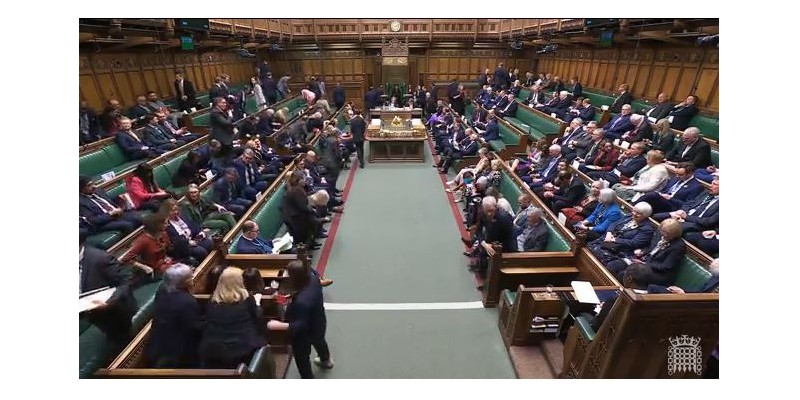
On Wednesday 19 March 2025 the National Insurance Contributions (Secondary Class 1 Contributions) Bill returned to the Commons following the Lords amendments.
The Bill was introduced on 6 November 2024, and intends to raise employers’ national insurance contributions to 15%, lower the secondary threshold to £5,000, and increase the employment allowance to £10,500. There were 6 amendments selected for debate and votes:
Amendment 1 - Ayes 307 Noes 182; Amendment 2 - Ayes 310 Noes 183; Amendment 3 - Ayes 314 Noes 187; Amendment 4 - Ayes 313 Noes 190;
Amendment 8 - Ayes 316 Noes 189; Amendment 21 - Ayes 316 Noes 187
Amendments 1-20, which would have reduced receipts to the National Insurance Fund, were rejected because of the interference with the public revenue. Amendment 21 would have required the Chancellor to present a six-month impact review, was rejected as information has already been published about these matters and a further review was not deemed necessary.
The Bill then goes back to the Lords who will consider these reasons on 24 March 2025.
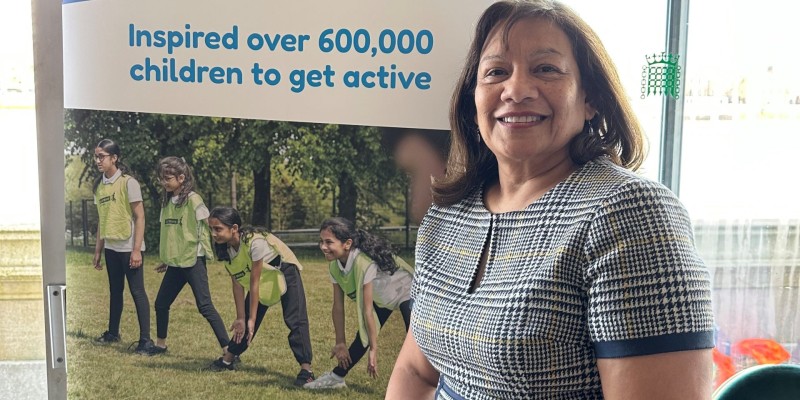
The 'Joy of Moving' programme was set up in a partnership between Ferrero and the English Football League in Community (EFLC) and on 19 March 2025 there was a drop in and a demonstration of the programme which teaches children how to enjoy getting up and active through play.
In 2024, Sport England found that 52% of children do not meet the Chief Medical Officer guidelines of taking part in sport and physical activity for a least 60 minutes a day. With Walsall having one of the highest rates of childhood obesity in England, these programmes are more important than ever.
I have visited and seen the programme which is undertaken in partnership with Walsall FC Foundation at Delves School.
Children have responded positively to this programme saying they have a better understanding of why it’s important to be active and to eat a balanced and varied diet. They are also more motivated to stay active. The latest evaluation of the programme showed that 94% of children felt that the programme had given them new ideas to get active. All the activities are unbranded so there is no link with Ferrero who provide the support and finance the project.
You can find great ideas for games and activities on the Joy of Moving Resource Hub.
Videos
Covid Memorial Wall
20mph Speed Limits
RAF Centenary Flypast